
True OG Internet Dad's Sales Tips
And boy, they were aplenty.
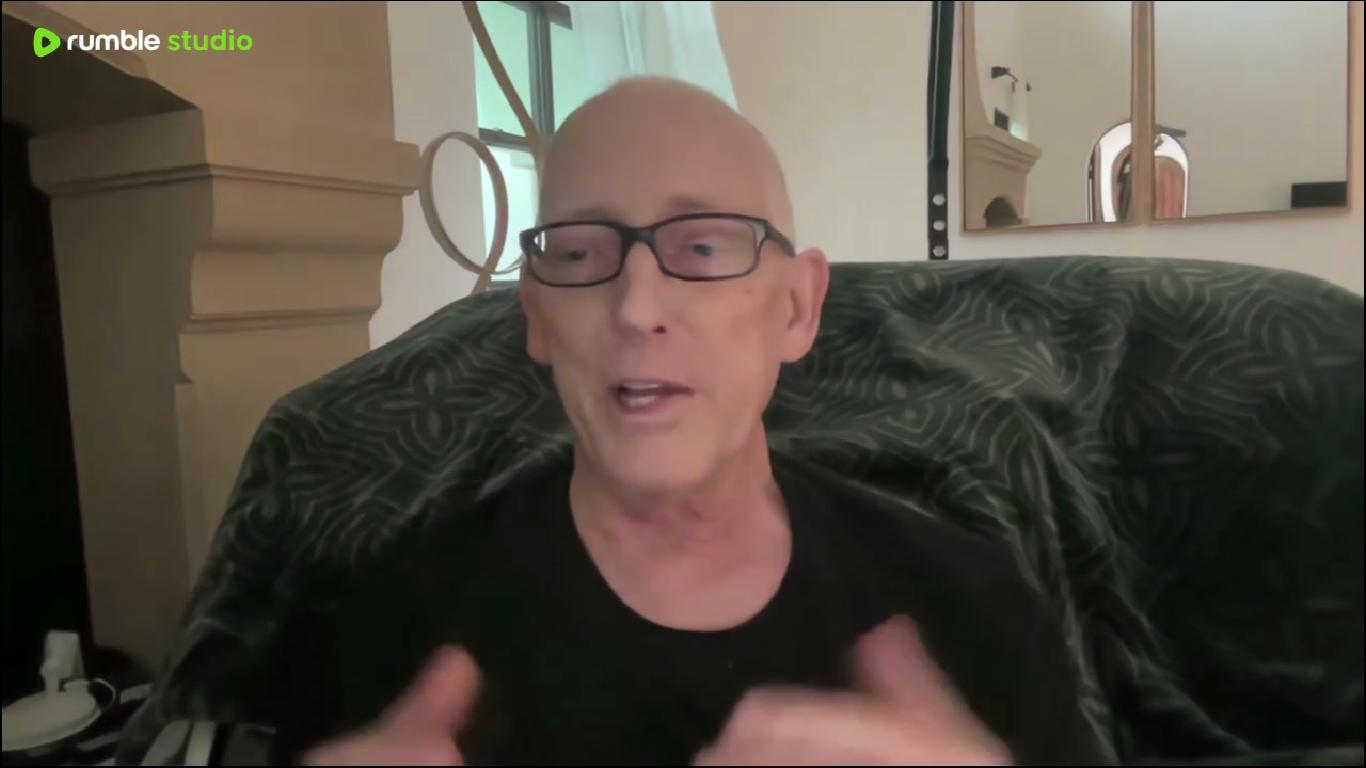
This month saw the death from cancer at just 68yo of whom many would know as the Dilbert cartoon strip creator, Scott Adams.
He often spoke about how he was decent at certain standalone pursuits. What with having an Economics degree and MBA, working through various corporate roles including Finance, and despite being a keen artist who'd won a prize for it aged 11 somehow received 'the worst grade ever' in a drawing class at college. Luckily that latter knock didn't set him back. As it was when he combined all these into one satirical endeavour did he strike remarkable gold.
I build on this in part for myself, blogging on it as recently as the Year's Day Zero.
Dilbert was a competent yet socially awkward engineer in an office where he was trapped in a Kafkaesque world of bureaucracy and nonsensical management. Such as introducing his Dilbert Filter, suggesting ills we suffer are more through cock-up than conspiracy. And his daily tribulating murmurings resonated worldwide.
His three-panel strips (some of the slightly longer too) would show occasional focus on an element of Sales.
Given my software background, here's but one from upgrade pitching that could well sadly bring knowing nods.
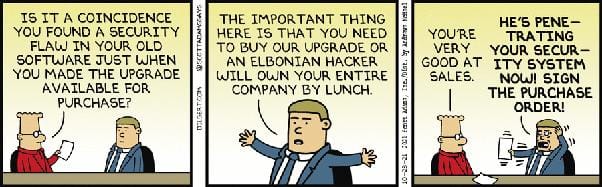
There was a time when you could search Dilbert's entire three-decade archive online by keyword. I sat through internal sales meeting decks using just such a strip found this way.
And I've seen cut-outs from the paper pinned to a cubicle divider.
As also a trained hypnotist, persuasion as a topic often featured too.
In later life he wrote best sellers. From an irreverent angle yet with key pointers for being better. I enjoyably read (his first), How to Fail at Almost Everything and Still Win Big. Not yer typical memoir-cum-self-help tome.
A prolific tweeter, he gravitated towards plundering American politics to spot, label, and re-orientate even, techniques useful to the ordinary voter.
Here follows a selection of five to which he returned over that time with meaning to our Sales world.
When you've sold, shut up
That's my phrasing - as first taught as cubrep - not his. He uses 'talking past the past the sale' in this same context. "No point in selling past the close", "only idiots do it". Which is bad. Whereas 'thinking past the sale', such as helping the prospect envisage their sunlit uplands we can open up for them, is good.
The Reciprocity Effect
He was a fan of this. Though did lament that it could often go either overlooked or be used in an unethical manner. I have helped salespeople in many ways on this including with a slant from the ol' Ben Franklin tale asking an 'enemy' to lend him a book. Generally, one good honest turn does deserve another.
On changing minds
A direct quote. "One of the things I learned as an author is you can almost never change a reader's mind. But sometimes you can say what they were thinking better than they were thinking it." Consider applying that flag to audience reaction when next pitching, and then qualifying.
All Data is Fake
A recurrent theme. "All of our data about everything is fake. It used to be my job at two big corporations to launder the fake data to make it look real. Because unreliable data was the only kind we had but we still had to sell our decisions." Reminds me of the business case primed epigram, 'more fiction's been written in Excel than Word'.
Attention alert
"The first rule of persuasion is getting attention for your topic." So how we focus on this is paramount with our potential bids. He clearly values AIDA. Adding an angle. "The first step for persuasion is planting the seed". Where you trying to sow? Find fertile ground and you're likely quicker down the road than any competition.